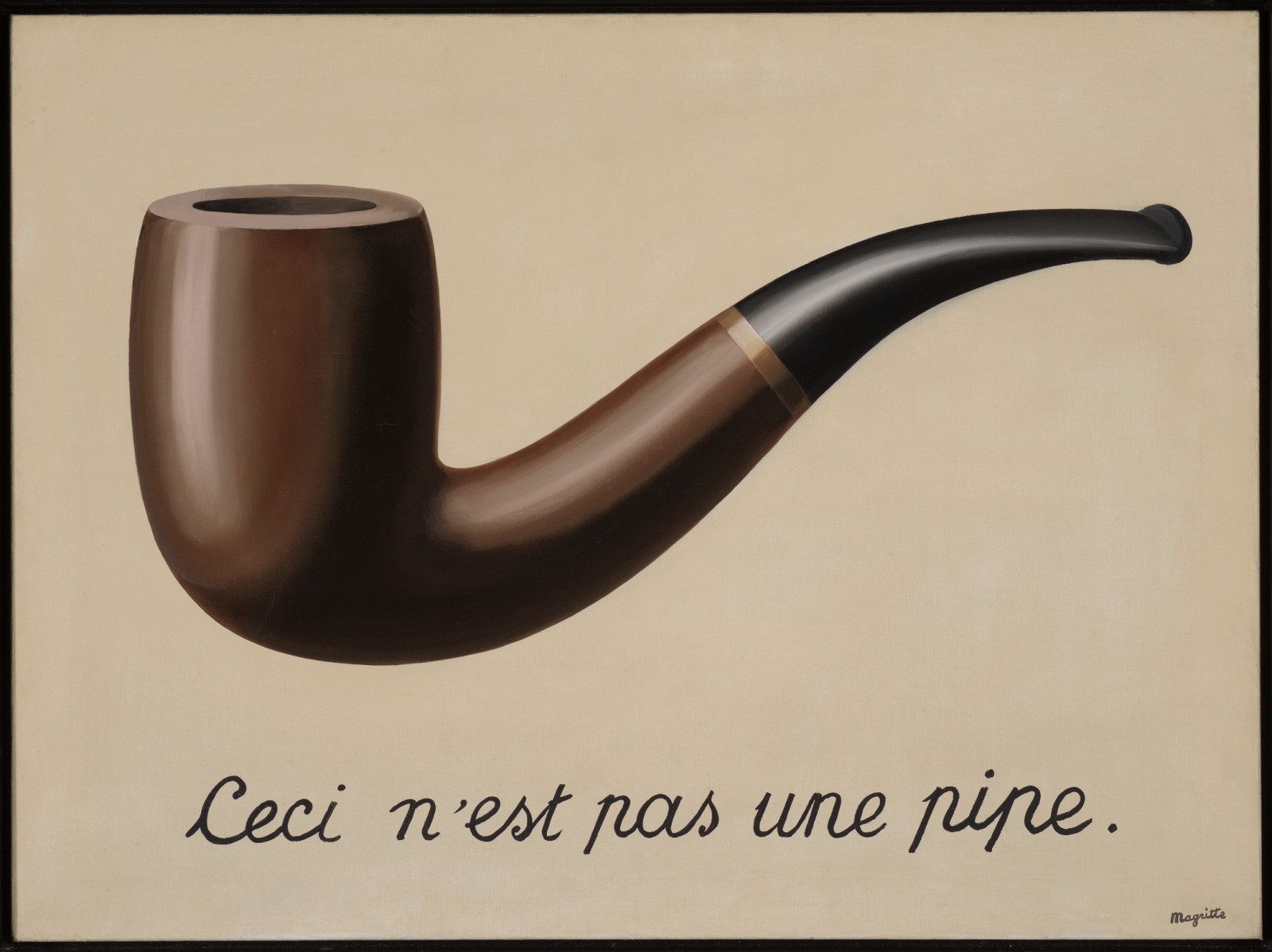
The Trechary of Images (René Magritte)
December 794 U.C., Heinessen - Five Years Later
Although Yang had been promoted to the rank of commodore several months earlier, and had been given an official ceremony and small party to mark his joining the ranks of the fleet’s flag officers, Lapp didn’t consider the matter properly celebrated until he came to visit Yang and could congratulate him in person. Yang was only too happy to have any excuse to see him, and it was made better by Jessica having her semester end in early December, allowing them both to join him up in Heinessenpolis, staying with him as guests for a week.
Jessica and Lapp arrived on an evening train, and they met Yang at a more upscale restaurant than Yang had ever wanted to go to. But since it was for the purposes of celebration, and Lapp insisted on footing the bill for the three of them, Yang didn’t mind all that much.
The dinner conversation was lively— the kind of chat that best friends who hadn’t seen each other in a year and a half would have. It had been that long since Yang had seen Jessica, but it had been even longer ago that he had last seen Lapp in person, and nearly three years since the last time they had all been in the same place. Their schedules rarely allowed them to meet up, and not for lack of trying.
Yang didn’t want to think that the rarity of these meetings made them more special— he suspected that he was the kind of man for whom habit and repetition only made happiness grow deeper— but they certainly were the bright moments of the past half-decade of his life.
It was raining, a warm summer rain saturating the night air, when they arrived back at Yang’s house. Yang and Lapp dashed in the door with their uniform jackets held up over their heads to shield themselves from the rain. Jessica laughed and got wet in the mad scramble, not caring if her little red heels splashed through puddles either. They crammed themselves through the door and fell into Yang’s living room, then hopped around laughing as they got their shoes and wet top layers off.
In the five years that he had lived in his house, on and off as it was, Yang had finally come to think of it as home. The books he had gathered like moss were now double-stacked on the once empty bookshelves and scattered across a myriad of other surfaces. Hortense Cazerne had once asked him what type of art he liked, and Yang, unable to think of what to say, had described his late father’s taste. On his next birthday, he had been presented with a bunch of framed prints, courtesy of both Cazernes, which now adorned his walls. Even if Yang himself had no taste in art, the odd familiarity of them— though his father had never owned these specific paintings— relaxed Yang when he stepped in the door.
And with people in it, the house felt warm and bright.
Lapp made a direct line for the kitchen to locate the wine that had been chilling in Yang’s fridge, and poured glasses for the three of them before Yang and Jessica could finish getting their wet clothes off. He carried them adroitly out to the living room, and passed them to Yang and Jessica.
“And for you,” Lapp said, handing out the wine. “Congratulations, Commodore!”
“You really do not need to congratulate me,” Yang said, but he knocked his glass with Lapp and Jessica’s anyway.
“Why not?” Lapp asked.
“Because you’re months late, and, besides, I want to get out of the fleet as soon as possible, not get tangled deeper in.”
Jessica smiled behind her wine glass. “At least a flag officer’s pension is bigger than a captain’s.” She went to sit down on the couch, and Yang sat next to her, though Lapp remained standing in front of them for a moment, gesticulating with his wine glass, enough that Yang wondered if he would spill it on the carpet.
“A flag officer’s pension, and you can sell your image on ads— you’ll be rolling in it. You won’t have to work a day in your life, once you retire,” Lapp said.
“Please— I hope that by the time I retire, everyone will have forgotten El Facil enough that my image isn’t worth anything.”
“Are they still running your column in Pretty Woman ?” Jessica asked. She leaned her head on Yang’s shoulder.
“Yeah,” Yang said. “Not often, though. I’ve been in space too much for them to get good candids of me.”
“But now you’re stationed on Heinessen for a while,” Lapp said. “They’ll work hard to keep you a valuable newspaper commodity.”
Yang sighed, and Jessica said, “Come sit down, Jean.”
Lapp shook his head, too happy to pace around in front of them. He had a boundless, happy energy, and he wandered around the perimeter of the living room as he spoke, looking at all the art on the walls, and picking up and putting down the trinkets that sat precariously on Yang’s bookshelves. “I’m afraid I’ll have to get a day job, when I’m out of here,” he said.
“Didn’t you say once that you didn’t want to think about retiring?” Yang asked.
“That was before I was more than halfway through my tenure,” Lapp said. “Now that I’m past that point, I can see the light at the end of the tunnel.”
“Isn’t that dangerous?” Yang asked.
“Of course not,” Jessica said. “I like the idea of you both being done with the fleet.”
“When you retire, if you don’t want to sell your pictures, what will you do, Yang?” Lapp asked.
“I don’t know,” Yang said. “I’d love to go back to school and study history— my pension will be enough to cover that, if I can also get a teaching stipend at the same time.”
“You should come back down to Thernussen,” Jessica said.
“Right— teach at our alma mater,” Lapp said. “They’d love to have a celebrity on staff.”
“I don’t have that kind of qualification,” Yang said. “Besides, the instructors are all active duty. Look at what happened to President Sitolet— he got pulled back to the front lines.”
Lapp pursed his lips. “Well, fine. Teach at the city college. You’d still be in the city.”
“We’re building castles in the sky,” Yang said.
“I don’t think there’s anything wrong with that,” Jessica said. “I think it’s good to think about the future. It’s better than being resigned to war for the rest of your life.”
“That’s true.” Yang finished his glass of wine, and didn’t feel like getting up to the kitchen to get another. Jessica’s warm body was leaning on his arm, and she took his empty wine glass from his hand and put it on the side table with her own. “It’s nice to have time when I don’t have to think about that.”
“Your leaves are always too short,” Jessica said.
“Hey, it’s not like retiring will be like being on leave forever,” Lapp said.
“It could be,” Yang said.
“For you, maybe.”
“Come sit down, Jean,” Jessica repeated.
Lapp turned towards her, smiled, and put his empty wineglass down on Yang’s bookcase. He crossed the living room towards them, though instead of sitting in the empty space on the couch, he sank down to the floor, on his knees, and leaned his elbows on both their laps. He crossed his arms and put his chin onto them. Yang laughed and touched Lapp’s hair, coarse and blond, running his fingers through it. Lapp grinned up at them.
“Retire from the fleet, move to Thernussen,” Yang said. “I would like that.”
“It would be nice to be together all the time again,” Jessica said.
“And what do you want to do, when we’re both out of the fleet?” Lapp asked her.
“Oh—” She seemed startled by the question, perhaps troubled by it. “I haven’t been thinking about it.”
“Because it’s dangerous to think about the future?” Lapp asked.
Jessica smiled and shook her head, and put her hand on Lapp’s, resting on her leg. “I just haven’t,” she said. “It’s alright. It’s a long way off.”
“True,” Lapp said, annoyed at the length of time. “But closer than it was.” He closed his eyes, and tipped his head to the side, so that Yang could more efficiently run his fingers through the soft, fine strands of hair over his ears, which Yang did with pleasure, making Lapp smile. But as Yang did this, he glanced over at Jessica, and their eyes met. The understanding that passed between them was unspoken, and would remain unspoken, but she offered him a tiny, melancholy smile. Yang stretched his other arm behind her, and pulled her closer.
In five years, when they were both out of the fleet, whatever domestic life Jessica managed to construct would not look anything like the snatched pleasure of leave. Jessica knew that, but wouldn’t say it.
“At least you have leave right now,” Yang said. “And I’m glad you’re here.”
They were able to stay together for a week, but after that, Jessica and Lapp left one at a time. Jessica got on a train back to Thernussen on Thursday afternoon, but Lapp was able to stay for another three days before he shipped out to his next deployment with the Sixth Fleet. Those three days passed in a pleasant haze for Yang. It felt so natural to see Lapp in his house, to laugh with him, to wake up next to him in bed. It was necessarily tinged with bittersweetness— the experience was savoring a taste of something impossible and stolen— but Lapp paid that no heed, and so Yang tried not to as well.
He left on Monday morning, so early that the sky was still pitch black and the roads were empty. Even the spaceport felt like a ghost town. Yang and Lapp strolled down the main concourse together, looking for Lapp’s terminal. The terminals not in use had their lights off, and there were only a few people waiting for delayed flights or early for on-time ones napping or ignoring the world in the uncomfortable chairs there. The usual music piped in from the overhead speakers was dimmer than usual, warbling only faintly from the concourse speakers. They found Lapp’s terminal, which had a few other bored looking soldiers sitting around at it, some of whom Lapp recognized and waved to. But before Lapp went to sit down, he walked a bit further with Yang.
“I’ve got plenty of time before my flight,” Lapp said. “Unless you’re in a hurry to abandon me.”
“I’m not,” Yang said, so they walked all the way to the end of the concourse. Lapp dragged his suitcase behind him, but Yang carried his messenger bag for him. At the end of the concourse, where the last few terminals were dark and empty, there was a huge window, looking out over the runway. It had taken Lapp long enough to check in for his flight that the sun was now coming up, the white wings of the airplanes parked along the buildings being stained a faint pink, reflecting the clouds. Lapp leaned bodily against the window.
“Do you know when you’ll have leave next?” Yang asked.
“Couple months,” Lapp said. “I can stop by and see you, but if it’s not Jessica’s break, I’ll spend most of it in Thernussen.”
“Yeah, I figured. But it’ll be nice to see you again.”
“I haven’t left yet,” Lapp said with a grin, and punched Yang’s shoulder lightly. “Don’t tell me you’re committing the first sin of being a soldier.”
“What’s that?” Yang asked.
“Looking forward to your next leave before you’ve finished the current one.”
“It’s your leave I’m looking forward to,” Yang said. “That’s different.”
Lapp laughed. “Well, you’re tempting me to look forward to it, too. I’m personally trying to savor my last few minutes before shipping out, without putting the pressure of the future on them.”
“I’m sorry that they have to be spent in an airport.”
“That’s where they’ll always be spent.” Lapp was cheerful, rather than resigned. “Thanks for bringing me.”
“You’re welcome.”
They looked at each other, Lapp leaning on the window and smiling. Down the runway, a plane was leaping into the sky— Yang watched it for a moment, until it disappeared into the rosy darkness of the low-lying clouds.
Lapp checked his watch. “Boarding is in five minutes, theoretically.”
“Is your flight on time?”
“I haven’t heard an announcement saying it’s delayed.”
Yang looked all around, hoping for a board displaying flight statuses to be around, but he didn’t see anything except the map directing people to the restrooms right near where they stood.
“Should you head back?” Yang asked. They were both procrastinating, and they both knew it.
“Maybe,” Lapp said.
“Trying to stretch out your leave as long as possible?”
“Can you blame me?”
“Not at all.”
Yang sighed and reached for Lapp’s suitcase, intending to get started on their way back down the concourse towards Lapp’s terminal, but Lapp grabbed his arm.
“I’ll be back before you have a chance to miss me,” Lapp said.
“I doubt that,” Yang said. “But stay safe.”
“I might say the same to you.”
“Heinessenpolis is as safe as it gets,” Yang said.
“You’re not being hounded by the media anymore?”
Yang laughed. “I’m not worried about them.”
“Good,” Lapp said. And with his hand on Yang’s arm, he pulled Yang forward. They were in public, but the end of the concourse was peaceful and empty, and Lapp kissed him. It was only a moment, but it made Yang warm and terribly sad at the same time, and he put his hand on Lapp’s when they pulled away from each other. Above them, the intercom crackled, a woman’s voice announcing that boarding had begun for Lapp’s flight.
“I will be looking forward to your leave,” Yang said.
“Well,” Lapp said, taking his messenger bag from Yang and tilting his suitcase so that they could start walking, “now that I’m headed out, that’s allowed.”
When they reached his terminal, he gave Yang a wave and joined the line of soldiers filing onto the plane. Yang leaned against a pillar and watched until Lapp’s back disappeared through the jet bridge doors.
Without the excitement of Lapp and Jessica visiting, life in Heinessenpolis and work in the military headquarters was predictable. News from the front came in daily, but Yang got the sense that it was abstract and immaterial to many of the people working in HQ. The movements of ships, of life and death in the Iserlohn corridor, became statistics when presented as records of losses and engagement reports written in the same formal tone. Even the images that often accompanied these reports— three dimensional models of fleets engaging each other in space, videos of battle scarred ships fighting their last, photos of debris fields— were simply images. To people who looked at them every day, they ceased to contain the human toll they were supposed to represent. It was all far away, and if it was happening to real people, those people were someone else, strangers in photographs.
Yang, for his part, tried to not let this particular line of thought enter his head. He wasn’t religious and never had been, but the act of stopping each time he looked at one of these photos and trying to keep the human element fixed in his mind took on a religious quality. It was a duty, one that no one had assigned Yang, but that he took on anyway out of a sense of obligation.
He wasn’t sure if he should blame everyone else for letting the images and numbers become immaterial. He felt like recognizing the meaning of the pictures would perhaps lead to more cautious decision making on the part of the fleet leadership, but he understood why no one else looked at engagement reports with the careful gravity that he applied. It took a toll. Yang slept better on the front lines than he did after a day of this— he would lie awake in bed at night, playing the images out in his head.
So, Yang felt particularly frustrated and out-of-sorts on the morning of the memorial service for the Grand Canal . He, along with most of the staff of HQ, was required to attend, dressed in their stiff black formal uniforms. The grand auditorium on the bottom floor of headquarters could hold thousands of people, and it made Yang weirdly frustrated on behalf of the dead. The families of the Grand Canal ’s crew filled the first few rows of the auditorium— Yang had glanced at them as he came in. These civilians were the only ones who were mourning. Everyone else was performing a role: dressing in black to create the picture of solemnity and grief, to create an image of the fleet caring for the lives of individual soldiers under its command.
The Grand Canal had been one ship, and if this kind of service had been pulled together for every ship lost in battle, there would never be an end to it. So many people went to their oblivion completely unremarked, except for their families they left behind. Were the families of the Grand Canal ’s crew pleased that their dead had been singled out for honor, or were they aware of the artifice? Did they know that the story the fleet leadership was spinning on stage, weaving out of thin air to explain this tragedy, was simply not true?
Yang sat and listened to the story presented by Job Trunicht, the defense minister, as he spoke about what had happened to the four hundred people on board the Grand Canal. According to Trunicht, while charged with escorting civilian ships carrying vital military supplies, the Grand Canal , leading her merchant ships like ducklings, had encountered an Imperial force in the corridor. Heroically, the Grand Canal had held off the Imperial force long enough to allow the majority of the merchant ships to escape.
On one level, this was true— the Grand Canal had done this. What Defense Minister Job Trunicht failed to mention, however, was the convoy of other fleet ships that had also been tasked with escorting the merchants. Those ships had interpreted a not-quite-command to protect military hardware above all else as an instruction to turn back and leave the merchant ships alone in the most dangerous areas of the route. The Grand Canal alone had stayed with the merchants, while the other destroyers in the convoy, who could have turned the tide of the eventual encounter, had left before laying eyes on an Imperial force.
Trunicht’s voice droned on and on. It was a very simple matter at its core, but in order to justify gathering everyone in the auditorium, they had to make the event fill time. Yang’s gaze kept sliding off the main stage where the speakers were arrayed and looking around at everyone else in the hall. There were plenty of people he knew— most of his fellow staff officers watching the front much more attentively, or at least appearing to, even if they were also tuning it out.
After scanning the rows of soldiers, Yang looked over to the side of the room, where journalists and cameras were arrayed. He was mildly surprised to see a face he recognized— Patricia McCall, of Pretty Woman Magazine , was jotting something into her notebook, and pointing out to her attached photographer a man sitting in the front row whom they should take pictures of and interview. It was a moderate relief to Yang that Vice Admiral Holland, one of the current young stars of the fleet, was the subject of Patricia’s attention, rather than himself. It gave him liberty to look at her, and he did, simply because he would rather do so than look at the pageantry on stage.
Perhaps his staring at Patricia had caught her attention, in the way that a person could feel eyes on them. When she turned, either by chance or because she felt Yang looking at her, she locked eyes with Yang across the crowded room, and smiled in her cheerful-but-predatory way.
When the event was over, Yang tried to wait out the press of the crowd and sneak out without being noticed. Unfortunately, when he went into the hallway, he found that Vice Admiral Holland was still surrounded by a crowd of reporters, including Patricia. She seemed less enamored by Holland than the rest of the crowd, appearing slightly bored at his canned answers. Beside her, her attached photographer energetically snapped images of the towering man. She glanced behind herself at exactly the wrong moment and caught sight of Yang trying to get to the elevators.
“Commodore Yang!” she cried, which had the unfortunate effect of getting every other reporter’s attention as well. “Could you tell us your thoughts?”
Before Yang could escape, he found himself surrounded by Holland’s former crowd. He scratched at the back of his head. He knew why they had all come to him, even before Patricia said, “Just like the Hero of El Facil, the Grand Canal saved civilians, so what do you think of their awarding of medals today?”
They wanted a more human angle than the gruff victory speech that Holland had been giving. That would print better in the news.
On a better day, Yang might have been capable of mumbling something sufficiently patriotic, something that wouldn’t be fit to print in the most fluff-filled issue of Pretty Woman . But today, with the image of the cratered shell of the Grand Canal fresh in his mind, Yang looked directly at Patricia McCall, rubbed the back of his head, and said, “ Grand Canal probably needed another friendly ship, rather than a hundred medals.”
Patricia raised her eyebrows at Yang, but any caution she might have advised him in was too late in coming, since the words had already fallen from Yang’s mouth into the waiting microphones of the reporters. Several others yelled questions at him, but before Yang could say another word, even if he had wanted to, the press security detail broke through the reporters’ ranks.
“Requests for interviews must be conducted through official channels!” the lieutenant in charge said as two of his enlisted men got in between Yang and the crowd. Not gently, they put their hands on Yang’s arms and steered him away. He glanced behind himself as they escorted him out, and saw Patricia watching him go.
After the not-insignificant chastising Yang received from the fleet press office, he was finally able to leave headquarters for the day. When he went out to his car in the long parking lot, he found Patricia leaning against it. He wasn’t exactly surprised.
“Don’t you know interviews are only supposed to go through official channels?” Yang called out to her as he approached through the parking lot.
“Off the record, Mr. Yang,” she replied, and held up her hands in a gesture of surrender— no notebook or microphone.
Yang trooped the rest of the way towards her. They were the only two standing in the sea of cars, but his reflection followed him across the vehicle windows and side mirrors. “What is it that you want me to say off the record?” he asked, when they were finally face to face.
“Oh, I don’t want you to say anything. In fact, I want you to keep your cute little mouth shut.”
“Easier said than done.”
“No, I think you could manage it if you knew what the stakes were.”
“Is this a threat?” Yang asked.
“Why would I want to threaten you?” she asked. “You sell magazines for me. In fact, I’m warning you so that you can continue to do that.”
“So what are the stakes?”
Patricia reached into her purse and pulled out her phone. She spent a long moment fiddling with it, so long that she actually shot Yang a slightly mollified smile, but then held it out to him with a more serious expression on her face. At first, in the glare of the parking lot, he couldn’t see the picture, but he took the phone from her and tilted it so that the image on the screen swam into focus.
There he was, silhouetted against the sunrise’s pink clouds, kissing Jean Robert Lapp in an empty corner of the Heinessenpolis spaceport. It was, actually, quite a beautiful picture, despite the invasion of privacy it was, and despite the fact that it was a threat. Unlike every other photograph of him Patricia McCall had ever published in her paper, Yang could remember exactly what he had been thinking and feeling in that moment, and the image brought the feelings rushing to the forefront of his mind. He stared at it for a long time, so long that Patricia pried the phone from his hands.
Almost gently, she said, “I’m not going to publish that, Mr. Yang.”
“Why not?” he asked.
“There’s no sense in ruining two men’s careers, if the fleet only wants to ruin one.” She laughed, indicating that this was not actually her reason. “But other people in this industry aren’t as scrupulous. It’s not my photo, and if someone higher up wants you to fall from grace, you will. But this is me— personally— giving you a second chance.”
“Why?” Yang asked again. It felt like the only thing he could say. It was funny, a distant corner of his mind informed him, that in a battlefield, he could easily understand his opponents and allies and what they’d do and why they’d do it— but here, in this parking lot, or in any peaceful conversation, he was always on the back foot.
Patricia smiled at him. “Have a nice evening, Mr. Yang,” she said, and wiggled her fingers at him in a wave as she headed off through the rows of cars, eventually vanishing into one.
Although Patricia had, for whatever inscrutable reason, prevented the worst of the disaster, the troubles were not over for Yang. Cazerne, who wasn’t in Yang’s chain of command, summoned him to his office a few days later.
Although they were both flag officers, and Cazerne didn’t outrank Yang by that much, he still felt like a schoolboy when he sat across from Cazerne in his office, his eyes lingering on the polished wood surface of his desk. It was so shiny, he could almost see his reflection in it, amidst the dark whorls of the oak. Cazerne steepled his fingers and stared at him.
“Do you know why you’re here?” Cazerne asked, which didn’t do anything to make the schoolboy feeling go away.
“Because you’re my friend and you care about my career?” Yang couldn’t help being a little sarcastic.
“Unfortunately, yes,” Cazerne sighed. Yang’s sarcasm had deflated him. “But more specifically, I got a phone call from someone I never wanted to get a phone call from.”
“Who?”
“That reporter for Pretty Woman . The one who crashed my wedding.”
Yang almost commented that since he was the one who let her in, it couldn’t exactly be called crashing the wedding. But there were other things he should say instead— ones that wouldn’t try Cazerne’s patience. With trepidation, Yang asked, “And what did she say to you?”
“Nothing in particular. But she says that if someone doesn’t help you fix your image, you’re not going to have an image anymore.”
So, she hadn’t shown the photo to Cazerne. Yang crossed his arms and slumped back in his chair. “I don’t care if I have an image or not.”
“I thought you’d gotten over that particular annoying idea of yours years ago.”
“I learned to ignore people wanting me to have an image,” Yang said. “That’s not the same as getting over it, or wanting to have one myself.”
“You’re right— it’s not. And even if it was, you shouldn’t— can’t— ignore it.”
“And why are you the one in charge of fixing my image?”
“Because I can,” Cazerne said. “And because I want to. I don’t think there is anyone else who meets that qualification”
“I’m not that disliked.”
“No, but nobody else has time in their day to clean up your mess.”
“So, how are you going to fix me? I’m not going to parade around,” Yang said. “You can’t make me go to parties.”
“Oh, you’ve fallen off the party invitation list with your recent stunt. You’ll have to work hard to get back on.”
“I should say things to the media more often, then.”
“I’m trying to help you, Yang.”
Yang finally straightened in his seat. “Sorry. What is it that you want me to do?”
From his desk, Cazerne pulled a manila folder and passed it to Yang. “Charity work.”
The first thought that came into his head was to protest, citing his laziness, but instead of opening his mouth, he opened the folder. Inside, there was a photograph of a serious looking young boy with platinum blond hair, stapled to a piece of paper with the heading ‘Officer Placement Program’.
“You want me to tutor kids or something?” Yang asked. He could do that, actually.
“Not exactly,” Cazerne said. “That boy is Julian Minci. His father worked in my office, oh, six years ago.”
“Okay…”
“His father was killed in action, and Julian here ran out of extended family who could take him in. He’s been in the foster system for a couple years, and since he shows real promise— he’s a very smart boy— he was recommended to the Placement Program.”
Cazerne said all of this like it meant anything to Yang, but Yang’s blank stare prompted Cazerne to continue.
“The program places war orphans with officers who will house them and give them guidance. Since Julian’s father worked for me at one point, I was asked if I could find him a suitable placement. This will be good for both of you.”
There was a moment of shocked silence. “You want me to adopt a child?”
“Not adopt. Foster, until he’s of age. It’s not legally binding. If it turns out to be bad for both of you, another place can be found—”
“Then find it,” Yang said. “I’m not at all qualified to take care of a child.”
“Nor are most people who become parents,” Cazerne pointed out. “They don’t make you pass a test.”
“I don’t want to be the one responsible for ruining some kid’s life.”
“To put it completely bluntly, Yang, this boy’s father died, and so did the grandmother who took him in after that. He’s been in the system since. There is absolutely no way you could ruin his life more than it already has been ruined. You’d be good for him. Even if all you can give him is the stability of having a roof over his head.”
“You’re trying to make me feel bad.”
“Yes.”
“You’ve seen my house.”
“Learning to be responsible enough to keep it clean for a child to live in would also be good for you.”
“I don’t want to,” Yang said. “I’m sorry, Cazerne, but I really don’t. I’m not saying this because I’m lazy— I would be a terrible guardian for a kid.” He pushed the folder across the desk, back towards Cazerne, but he pushed it too hard and it slid across the polished desk to the floor. “Sorry— didn’t mean to do that.”
Cazerne sighed and bent down to pick up the pieces of paper that had all fluttered out as the folder spilled to the floor. Muffled, from beneath his desk, he said, “I can’t make you, but I wish you’d consider it. It would be good for you, not to do only something that looks good, but also to actually do good in the world. You could use the self esteem.”
As Cazerne spoke, he deposited individual papers on the desk as he gathered them. The soulful eyes of the boy stared up at Yang from his photo, and Yang was half tempted to flip the picture over, so that he wouldn’t have to look at it anymore. One of the other documents that Cazerne deposited on the desk was a photocopy of a handwritten letter. A child’s handwriting, to be sure, but perfectly neat.
Dear Sir or Ma’am, the letter began.
My name is Julian Minci. My father was Commander Charles Minci, who was killed in action four years ago. I am writing to you because you are looking to support a child in the Officer Placement Program, and I hope you will consider me. I think I would be a valuable addition to your household.
The coordinator of my children’s home, Mrs. Perry, recommended me to the program because she said that I was the perfect candidate, because I show promise and am well behaved
I will tell you about myself. I am twelve years old, and I am very neat. I could help you with cleaning, and I know how to cook also. I am a good student, and will not cause any trouble.
My goal is to become a soldier like my late father, so I would like to learn what it takes to—
Yang put the rest of the letter down without reading it. “What is wrong with this kid?”
“Wrong with him? Nothing’s wrong with him,” Cazerne said as he emerged from under the desk. “He’s in perfect health. He wouldn’t be eligible for the program if he wasn’t.”
“No, why does he write like this?” Yang asked. He held the letter out to Cazerne, who read it.
“You’d write like that, too, if you were a twelve year old who thought that their chance at getting out of a group home relied on being as quiet and useful as possible,” Cazerne said. “He says it himself, if not in so many words— he’s not a stupid boy.”
Yang silently looked at the photograph of the child. It was impossible to know anything about him from the image— even if every emotion hadn’t been tightly locked away behind Julian’s controlled smile, the photo told Yang nothing.
“And why do you think I should be the one to take him?”
Cazerne smiled, realizing that he had Yang fully in his clutches, and could now say whatever he wanted. “Because it would look good for you to have a family. And it might be good for you, too.”
Yang looked from the photograph on the desk to Cazerne’s face to the cloudy sky outside the window. “Fine,” he said.